Preschool/Grade 1-2
This page contains the information for giving the preschool and grade 1-2 children new information about diarrhea and stomach pain.
A good way to teach the children something new is to first give a brief introduction about what will be done in the lesson. The information to be learned is shared with the children by watching a video. After this, the children can ask their questions.
The components that come up in the lessons are:
- What is diarrhea?
- How do you wash your hands properly?
- What is good hygiene?
- What is safe drinking water?
- What are bacteria and viruses?
Videos are available for the first three components to convey the information. For the safe drinking water part, a poster is available. This can be discussed in class to convey the information to the children.
Start of the lesson
Good morning boys and girls! Today we are going to teach you about diarrhea and stomach pain.
First we are going to watch 3 videos. One video about what exactly diarrhea is, how is it caused, what can you do about it? The second film is about how to wash your hands properly and the third film is about how to keep your own body clean. After each video there will be an opportunity to ask questions if you have any. We also have a few more posters we want to discuss with you about bacteria and viruses and clean drinking water. Also after this you may ask any questions you have.
After watching the videos and discussing the posters, we will play a game called memory! On the table are 17 cards with questions about the movies and the posters, so it is important that you pay attention! The goal of the game is that you turn over the correct answers on the table that belong to the question! After that, we will have a short wrap-up.
How to show the movie in the classroom:
To give the information to the children, we are going to watch 3 videos. To watch the video, you will need a laptop or a computer on which to play the video.
In order for the video to come across well in the classroom, it is important that the video is clearly visible. Use a projector for this, so that the image comes into the classroom enlarged. Also, use a speaker so that the video can be heard throughout the class.
Show the children the video and give them an opportunity to ask any questions they have after the video. Answer these questions. When necessary, translate what is said in the video.
What is diarrhea?
Movie link: https://www.youtube.com/watch?v=tiz8zeGgp7U
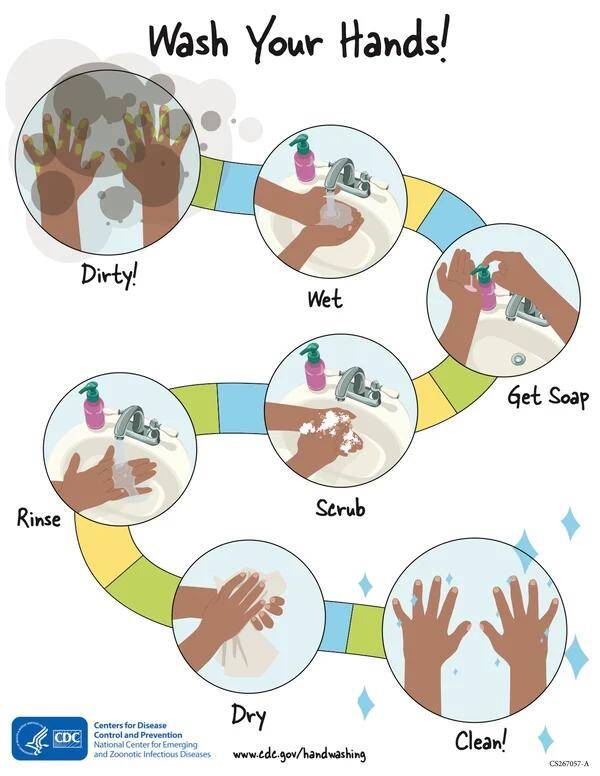
How do you wash your hands properly?
Movie link: https://www.youtube.com/watch?v=UitUdTjhZz8 ,Now practice with the class hand washing like you just saw in the video
Poster:
(About Handwashing, 2024)
Explanation:
Washing your hands is easy, and it’s one of the most effective ways to prevent the spread of germs. Follow these five steps every time.
Wet your hands with clean, running water (warm or cold), turn off the tap, and apply soap.
Lather your hands by rubbing them together with the soap. Lather the backs of your hands, between your fingers, and under your nails.
Scrub your hands for at least 20 seconds. Need a timer? Hum the “Happy Birthday” song from beginning to end twice.
Rinse your hands well under clean, running water.
Dry your hands using a clean towel (About Handwashing, 2024).
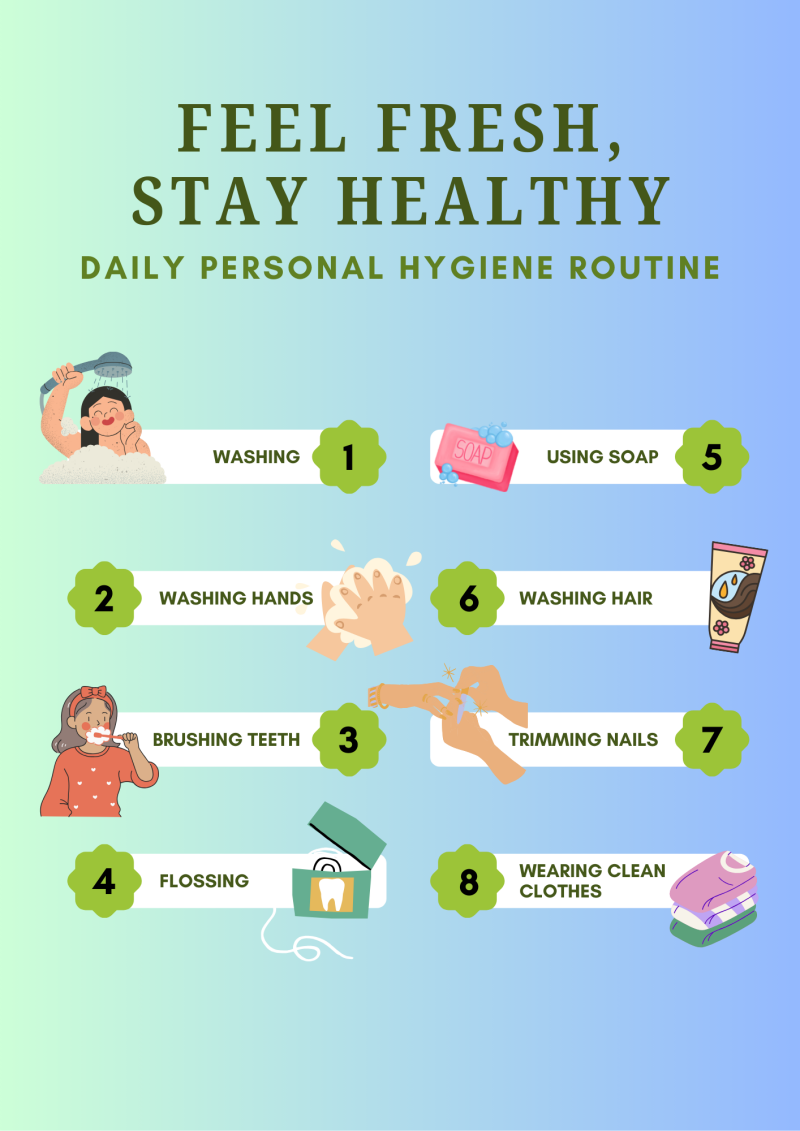
What is good hygiene?
Movie link: https://www.youtube.com/watch?v=sl5eNzLcBYw, watch the movie untill minute 8:55
Poster:
(Healthdirect Australia, 2023)
Self-created
What is safe drinking water?
Poster:
(Admin, 2022)
Self-created
Explanation:
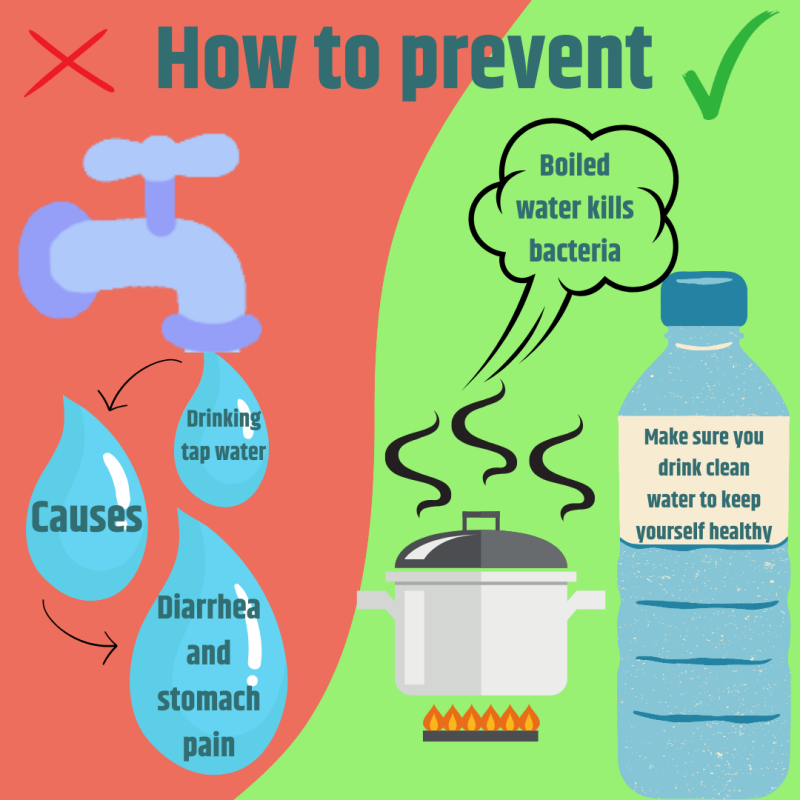
It is good to know that not all water can be used as drinking water! Here in Tanzania the water from the tap is not safe to drink, there are many bacteria in the water that can make you very sick. Especially for children, tap water can be dangerous. Therefore, we want to teach you how to make tap water safe and which water you can drink to avoid getting sick.
As you can see on the poster here, tap water can cause diarrhea and stomach pain. To prevent this you can boil the tap water, by boiling the water first the bacteria that are in the water are killed and you can drink it safely without getting sick. Bottled water that you can buy in stores is also safe to drink. Therefore, if you drink boiled water or bottled water you are less likely to have stomach pain and diarrhea (Admin, 2022).
What are bacteria and viruses?
Poster:
(Het Verschil Tussen een Virus en een Bacterie - Medicijnen.nl, z.d.)
Self-created
Explanation:
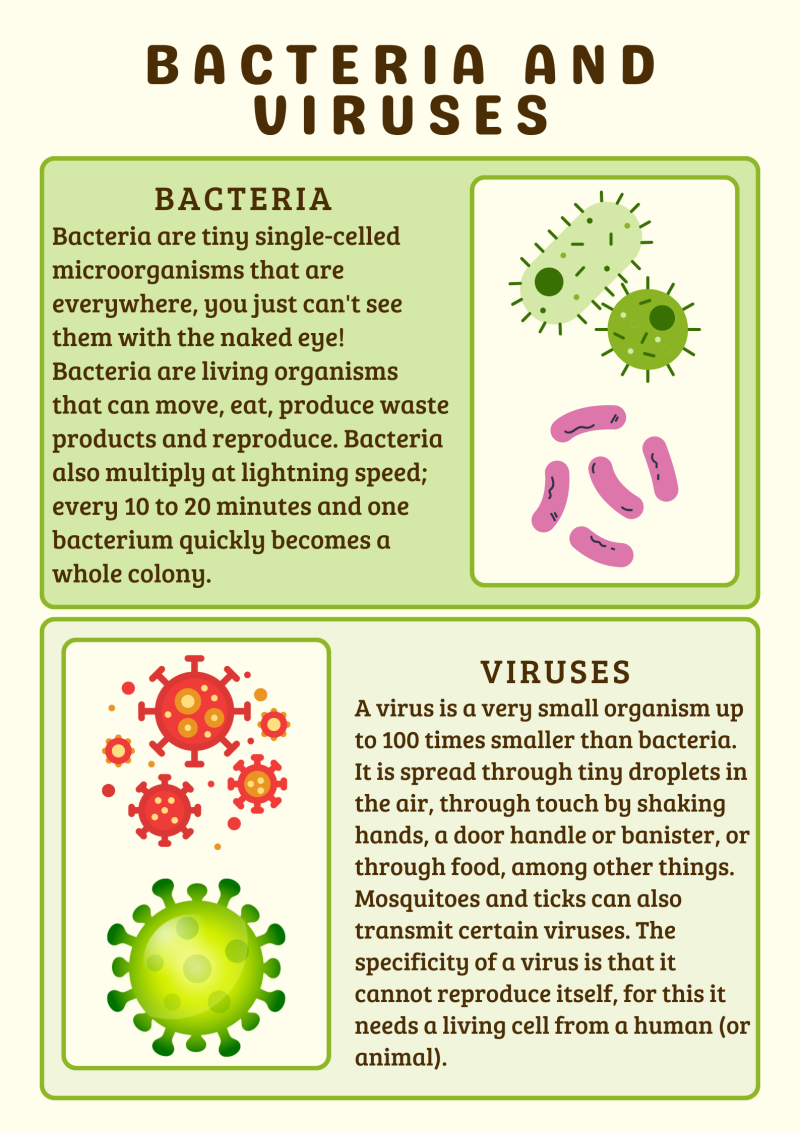
Bacteria are super tiny critters, so small you can't see them without a microscope! They live all around us. Bacteria are living creatures: they can move, eat, defecate, and they have babies by dividing in half. This happens very quickly; every 10 to 20 minutes there are more of them. So one bacterium can quickly turn into a whole bunch.
Viruses are even smaller than bacteria, as much as 100 times smaller! They can travel through tiny droplets in the air, such as when someone sneezes or coughs. You can also get a virus by touching something, such as a door handle, a banister, or through food. Sometimes mosquitoes or ticks transmit a virus. A virus cannot reproduce itself. To do so, it looks for a living person or animal and uses a cell from that body to make more viruses (Het Verschil Tussen een Virus en een Bacterie - Medicijnen.nl, z.d.)
Closure of the lesson
This was the lesson on diarrhea and stomach pain. Can you share what you learned? Are there any questions left unanswered? We hope you learned a lot and that you will take this knowledge with you and tell about it at home. We also want to give you 5 flyers. These will show what you have learned today. Give these to your parents/neighbors at home, other friends, people at church or from your sports club. If you have any further questions, feel free to ask us or your teacher!